
TOLL FREE 24/7: 1-800-975-6959

 |  |  |  |

EMERALD MINERALIZATION IN COLOMBIA Colombian
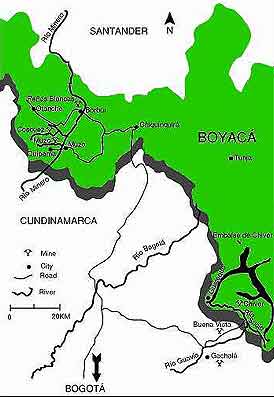
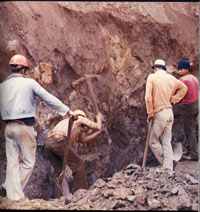
emerald mines are found in the lower cretaceous level of the eastern range in veins, dikes and filled fractures of sedimentary rocks. They are found in two different stratigraphic and tectonic areas: Guavio ( eastern side) and Muzo (on the western) Western Emerald Belt: The mining districs of Muzo, Quipama and Coscuez in the Paja formation (Lower Cretaceous - Middle) consisting of a thick package of black shales or fine carboniferous lutite sheets alternating with more siliceous lutites. These mines are found in two c haracteristical structures: tractures, veins and small capillaries. These fractures consist of black fragmented lutites cemented inly by calcite, quartz and pyrite. In some cavities, a second gcneration of calcite is observed. The veins and capillaries vary between 1 and 30 spore centimeters. Generally they are found by cutting through the stratification, although in some instances the cut is a parallel one and consist mainly of calcite and pyrite with quartz, emeralds, fluorite and rarely, parisite (Ca (Ce, La) 2 (Co3) 3h2) and codazite (dolomite with Ce). The Peñas Blancas deposit within the Rosablanca formation, all Calcareous (lower Cretacecms) and its lithological mineral and structural characteristics are, in general terms the same, with the exception perhaps of the absence of Calcite II.
In every case, emerald mines on the Western Belt are associated with regional type faults towards N 20 grade - 40 grades E and in their intersection with minor faults towards v N 50 grades - 7 - grades W. Eastern Emerald Belt: The Chivor mines are embedded within the Lutite formation of the Cáqueza Macanal Group of the lower Cretaceous Age. Lithologically they correspond to a thick package of black carboniferous lutites withthin layers of clay, limolites, thin sand and pockets of plaster. It has been demonstrated that a direct relation exists between regional faults and their transversal intersections with the mineralization of emeralds, and that a clear tectonic control is present, therefore preparing conduits for the circulation of hydrothermal fluids. In the mining district of Gachalá, mineralizations are generally present in fault zones with angular fragmentation of black and gray lodolites with calcite, feldespato, quartz and pyrite. Veins, composed essentially of plagioclase, quartz and pyrite are also present. Southwards, mincralized sites are found embedded in thc Guavio Caliza hormation (Lower Cretaceous) consisting of sheeted very fine black dolomites, with thick clay banks. The tectonic model of this part of the Eastern Range is the result of an upper positioning of various regional events that currently are manifested in a group pf inverse regional faults towards N25 grades - 35 grades E, affected by other more recents events towards NW - SF and E-W. |
 The Yacopi mines are found within the Villeta Group (Cretaceous-Midd le) consisting of diverse layers of black carbonic lutites, black siliceous Intites, claylutites and limelites.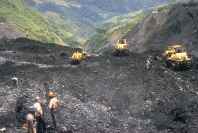



 |
 |
 |
|


| ||
|
- CONTACT US
- Inquiry your emerald
- Shop Emeralds
- Emerald Auctions
- How to order?
- Emerald prices
- Testimonials

- Faq´s
- Buyer Tips
- Learn Emerald 4c´s
- Enhancements
- Gem Certificate
- Colombian Mines
- Emerald Data
- Esoterically
- Legend and History
- Physical Properties
- Trapiche Emerald
- Cat´s Eye emerald
TOLL FREE 24/7
1-800-975-6959
[Investors] [Jewellers] [Virtual Shop] [About Emeralds] [About Us]
©Copyright 1998-2007 Esmerald.comä. All Rights Reserved. Images or content can't be copy or reproduced in any way without prior authorization of Esmerald.comä. http://www.colombianemerald1.com/t-contact.aspx
Designated trademarks and brands are the property of their respective owners.
Use of this Web site constitutes acceptance of the Esmerald.comä User Agreement and Privacy Policy.



-Enhancement Disclosure - FTC Guidelines , Esmerald.com use only not permanent colorless oil (cedar wood oil) and epoxy resins (Permasafe). See care requirements. Product listed are oiled, you can select Permasafe in any Emerald order. Unenhancement emeralds, have special prices not listed in the website.
-Grading Scales used are from Esmerald.com and only define products of this website. This scales are based in market grading like GIA, AGL and AGS.
-Emeralds and Specimens may be shown larger or short than actual size to show beauty and detail, visual representation could differ from Monitor and computer video card.