The 4 C’s are used throughout the world as a standardized method of
classifying the quality and value of gemstones. Originally developed for
classifying diamonds, this standardized approach has subsequently been implemented
in assessing the rarity and value of emeralds. Let us explain how…
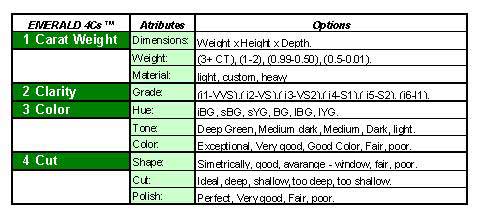
The value of any given emerald is based on a combination of attributes
under each rating of cut, carat,
color and clarity. Please
see the chart below for the various possible attributes associated with
each rating. Naturally, the higher the attributes of an emerald, the higher
its assessment of rarity and value. Colombian emeralds are known
worldwide to be industry leaders, with the highest standards of quality.
Some of the rarest and most expensive emeralds in the world come from such
Colombian mines as Muzo and Chivor.
We are the only emerald company in the world using scales to define our
Fixed Prices. Our scales are based on the GIA and AGL grading scales and
allow you to buy our emeralds based on professional standards of quality,
directly from the source and without inflated prices.
Rule of Thumb
In general, when judging an emerald’s value, color is of paramount
importance: the deeper and more vivid the green, the more valuable the stone will be.
Of course, there are also many attractive lighter green emeralds that are lively and
vivid when set in jewelry, as well as darker green emeralds that make up
for their lack of brightness in the richness of the color. Generally speaking,
however, very light or very dark emeralds are less valuable. As far as clarity
is concerned, unlike diamonds, a finely colored emerald is not significantly
devalued by inclusions.
Inclusions
Most natural emeralds have inclusions, often called “jardines”,
or gardens, which are regarded as the emerald’s natural birthmark.
The fewer the fissures, the more expensive the emerald. Cut, natural emeralds
of the highest quality weighing more than two carats are extremely rare
and costly. A large, deep green emerald with minor blue or yellow secondary
coloration that is relatively free of inclusions may cost up to tens of
thousands of dollars per carat.
U.S.A. 1998 to 2009 - Visa requires internet retailers to disclose the country where the credit card will be charged.
Enhancement Disclosure: according to FTC guidelines, we use only nonpermanent colorless oil (cedar wood oil) and epoxy resins (Permasafe). See care requirements. Products shown are oiled. You can select Permasafe for any emerald order. Unenhanced emeralds have special prices not listed in the web site.
Grading Scales used are only used to define the products of this web site. These scales are based on market grading like GIA, AGL and AGS.
Emeralds and specimens may be shown larger or smaller than actual size, and the visual representation could differ, depending on your monitor settings and your computer's video card.