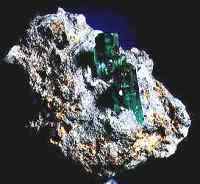
Characteristics of Emerald Specimens from Colombia
There are three main Emerald mining areas in Colombia: Muzo,Coscuez, and
Chivor. These three areas are comprised of many indivdual "cortes"
or mines. Muzo and Coscuez are on long term leases to two Colombian consortiums
from the Colombian government and Chivor is privately owned. Muzo and Coscuez
are much more proflific in production, thus the majority of the specimens
we sell are from these two areas. The best way to differentiate emerald
specimens from these three origins is by carefully examining the individual
characteristics of the crystals and the matrix.
Crystal Characteristics
The most obvious distinction between
crystals from these areas is that the Coscuez crystals have a frequent
occurrence of aggregate type formations with multiple terminations.
These aggregates will very often have a stepped like look and sometimes
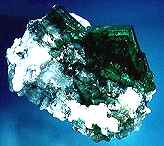
take on a tabular appearance. A good example of this tabular type
formation is a specimen from John Barlow's collection called El Silencio.
It was named "El Silencio" because it came from a corte
in Cosquez of the same name.
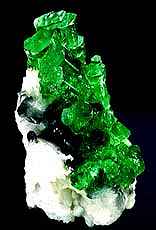
Another example of a multiple aggregate
type formation is a spcecimen that was on a recent cover of the "The
Mineralogical Record" (from Corte 35 in Coscuez). We called this
specimen La Cresta because the crystal formation appeared similar
to the crest on a roosters healign="justify"ad. Using color alone would make the
identification process very difficult. The emerald crystals in Coscuez
tend to exhibit a very wide range of colors and also tend to be more
included. Emerald crystals from Muzo tend to have more saturated color
than either Coscuez or Chivor. Chivor emeralds are best known for
their bluish caste and generally have much less inclusions and lighter
color than either Coscuez or Muzo. It must be stressed again that
color alone in many instances will provide no clues in regards to
origin.
In terms of size and shape, the emerald crystals from Muzo tend to be shorter
with a lesser likelihood of termination and clustering. The crystals from
Chivor frequently occur shaped like long thin pencil leads.
Matrix Characteristics
Muzo, Coscuez and Chivor specimens exhibit many of the same elements in
their respective matrixs'. The different combinations of these materials
is what helps in distinguishing them from each other. Black and grey shale,
white and grey calcite, and pyrite are the predominant elements that make
up the typical Colombian emerald matrix.
In the Coscuez area, black shale
in combination with either grey calcite or a rust colored layer of
iron oxide or a gray calcite matrix by itself are the most common
combinations found . Also thin veins of pyrite running through the
black shale is quite common rather than crystallized nodules of pyrite.
If you had to define any one thing as being the predominant characteristic
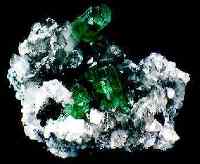
in Coscuez matrix material it would have to be grey calcite. The photos
of La Dosita and El Jardin are great examples of Coscuez emerald specimens.
In the Muzo area, three elements
combined with the ubiquitous black shale provide the best clues in
identifying a Muzo matrix. Those three elements are pure white calcite,
crystallized pyrite and clear quartz. White calcite and crystallized
pyrite are quite common with clear quartz being relatively rare. La
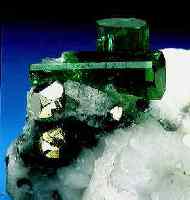
Cruz from the collection of Joe and Ann Ondraka is a classic Muzo
specimen. The white calcite and crystallized pyrite identify it immediately.
The beautiful dark green color and bluish tint of the crystals are
also typical of the El Indio corte (part of the Puerto Arturo area
which produces the best quality emeralds in Muzo).
The Chivor mining area is the smallest
area of three and is separate from Muzo and Coscuez which are adjacent
to each other. The matrix material from Chivor tends to be much more
fragile and "crumbly" in nature. Typically it is brown in
color and is a brecciated mixture of calcite with layers of iron oxide.
Iron stains are very common. Another type of matrix quite common in
Chivor is a grey almost marble looking shale. Chivor like Muzo, frequently
has crystallized nodules of pyrite occurring on the martix. Because
production in Chivor is sporadic and because the matrix material tends
to crumble, fewer intact specimens are found. El Primero is an excellent
example of a Chivor emerald specimen.
U.S.A. 1998 to 2009 - Visa requires internet retailers to disclose the country where the credit card will be charged.
Enhancement Disclosure: according to FTC guidelines, we use only nonpermanent colorless oil (cedar wood oil) and epoxy resins (Permasafe). See care requirements. Products shown are oiled. You can select Permasafe for any emerald order. Unenhanced emeralds have special prices not listed in the web site.
Grading Scales used are only used to define the products of this web site. These scales are based on market grading like GIA, AGL and AGS.
Emeralds and specimens may be shown larger or smaller than actual size, and the visual representation could differ, depending on your monitor settings and your computer's video card.